
Rebuild your skin's shield! Learn to improve skin barrier, avoid industry traps, and discover real solutions for healthy skin.
February 5, 2026
February 5, 2026

To improve skin barrier health, you must simplify your routine. Protect your skin from damage. And use ingredients that actually reach the cells that need them.
This means stripping back to a gentle cleanser, moisturizer, and SPF. It means stopping the constant exfoliation that creates inflammation. It means creating pathways for ingredients to get past the skin's outer wall.
Your skin is not failing you. The industry is.
The barrier is your first line of defense. The stratum corneum, the outermost layer of your epidermis, is the wall between you and the world. It's built like bricks and mortar. Corneocytes are the bricks. Ceramides, cholesterol, and fatty acids are the mortar holding them together.
This wall keeps water in and irritants out.
Here's the problem. Most products never get past it. The stratum corneum blocks molecules larger than 500 Daltons. That means most of what you're buying sits on the surface, doing nothing.
The industry knows this. They sell you hope in a bottle anyway.
About a liter of moisture evaporates from your skin every day. This is transepidermal water loss. When your barrier is compromised, that number climbs. Your skin becomes dry, red, irritated, sensitive. Conditions like eczema and rosacea flare up. The shield is broken.
And what does the industry tell you to do? Add more products. Exfoliate harder. Try a new acid. Layer on another serum.
They profit from your confusion. Every new product is another chance to strip your barrier.
Your skin's renewal cycle takes three to four weeks. That's how long it takes to repair itself. But you can't heal what's constantly being damaged.
We are the PureRiot Team. We formulate solutions that improve skin barrier function by creating pathways for active ingredients to reach living cells. We work with your skin's biology, not against it.
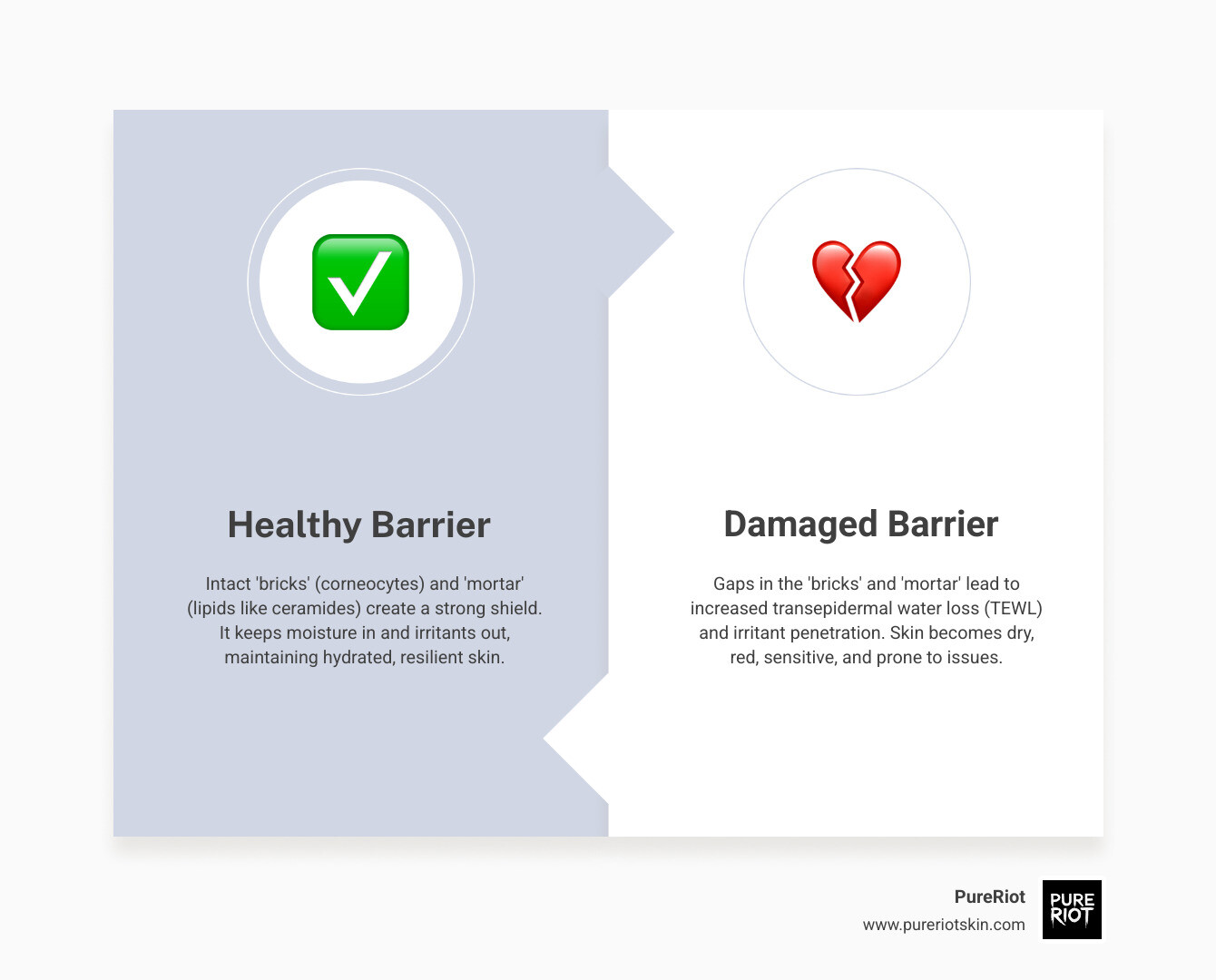
The skin barrier is the epidermis's ability to protect you. It is your body's first line of defense, located in the stratum corneum, the outermost layer of your skin. This protective wall keeps good things in and bad things out.
The structure is a brick wall. Corneocytes are the bricks, tough and resilient skin cells. The mortar holding them together is a complex mix of lipids: ceramides, cholesterol, and fatty acids. This intelligent design keeps essential moisture inside your body. It repels external threats. This is not just about aesthetics. It is about fundamental health.
The skin barrier works hard every day. It keeps water and natural oils from escaping. It blocks irritants, pollutants, and bacteria from getting in.
Researchers have described this barrier as your "first line of defense" against the outside world. If you want the science behind it, you can look at work on the skin barrier and its role in defense.
How do you know if your shield is compromised? Your skin tells you. It doesn't whisper. It shouts.
Signs of a compromised skin barrier are obvious. Redness. Dryness. Flakiness. Itchiness becomes a constant companion. Your skin feels tight, almost stretched. Sensitivity increases. Products that once felt fine now sting or burn. These are your skin's distress signals.
Unexpected breakouts can also indicate a damaged barrier. Your skin's defenses are down. Conditions like eczema, rosacea, and psoriasis worsen when the barrier is weak. This is a direct consequence.
One of the most telling signs is transepidermal water loss (TEWL). Moisture evaporates from your skin too quickly. When the skin barrier is compromised, TEWL increases. This leaves your skin vulnerable. It is a literal leak in your body's protective layer. Your skin is crying for help.
Many common skincare practices and environmental factors are silently eroding your skin's defenses. We call them the barrier breakers. They promise beauty but deliver damage.
The skincare industry loves to sell you exfoliation. Scrubs. Acids. Peels. They tell you it's the secret to glowing skin. They rarely tell you when enough is enough.
Harsh physical scrubs tear at your delicate skin. Chemical exfoliants, used too often or in too high concentrations, strip away essential lipids. This is not gentle renewal. This is an assault.
Scrubbing too hard and too often is a surefire way to destroy your barrier. The same applies to chemical exfoliants like AHAs and BHAs. They can help with skin renewal, but moderation is key.
The myth that more exfoliation means better skin is a dangerous one. It leads to a cycle of damage and temporary fixes. Your skin tries to repair itself, but you keep stripping it away. This constant disruption prevents your skin from healing. It makes it weaker, not stronger.
For sensitive skin, a soft cloth and a mild chemical exfoliant is a better path. This is about respecting your skin. It is about balance.
Your skin has a natural pH, known as the acid mantle. It's a delicate balance, hovering around 4.0 to 5.8. This slightly acidic environment is crucial for optimal barrier function. It keeps your skin healthy. It supports good bacteria and fights off the bad.
Harsh cleansers and alkaline soaps disrupt this balance. They strip away your natural oils. They raise your skin's pH. When your skin becomes too alkaline, it can't function properly. Enzymes that regulate skin health become inactive. Harmful bacteria thrive.
Cleanse with a product that has a pH between 4.0 and 5.0. This range supports your skin's natural acidity. It helps maintain the acid mantle. It protects your shield.
Avoid drying sulfates. These popular cleansing agents remove too much of your skin's natural oil. They damage your skin barrier. Choose gentle cleansers with hydrating ingredients. This simple switch makes a profound difference.
Your skin barrier is under constant attack. Not just from harsh products. Everyday habits and environmental factors chip away at its strength.
Hot showers feel good. But they are a barrier breaker. Hot water melts away your skin's healthy natural oils. It strips your protective lipid layer.
Dry air and low humidity are silent aggressors. They suck moisture directly from your skin. This leads to increased transepidermal water loss. Your skin dries out. It becomes vulnerable.
UV radiation is another major culprit. Sun exposure damages skin cells. It leads to oxidative stress. It weakens your barrier. Without proper protection, this shield crumbles.
Pollution, stress, and lack of sleep also play a role. These external and internal factors contribute to inflammation. They impair your skin's ability to repair itself. The world is full of things that chip away at your shield. You need to know how to defend it.
Repairing your skin barrier isn't about quick fixes. It's about understanding your skin's biology and working with it. It's about patience and consistency. This is how you genuinely improve skin barrier health.
When your skin barrier is compromised, less is more. Imagine a wound trying to heal. You wouldn't constantly poke it with different substances. Your skin needs a break.
Strip your routine back to the essentials. A gentle cleanser. A nourishing moisturizer. Daily SPF. This trio provides fundamental support. It allows your skin to breathe and gives it space to repair.
The temptation of a 10-step routine is an industry invention. For a damaged barrier, it's counterproductive. A simplified routine reduces irritation. It minimizes exposure to potential sensitizers. It fosters healing.
Your skin's renewal cycle takes about three to four weeks. You need patience. You need consistency. A simple routine is the most effective way to help restore your skin barrier.
Here's a truth the mainstream skincare industry doesn't want you to hear. Most products never get past your skin's surface. They sit there. They promise. But they don't deliver.
The stratum corneum, your skin barrier, is a highly effective filter. It's designed to keep things out. This includes most skincare ingredients. The "500 Dalton rule" is a scientific principle. It states that molecules larger than 500 Daltons are generally too big to penetrate the skin. And most active ingredients? They're far larger than that.
So, when you apply that expensive serum, that potent cream, where does it go? Mostly, it stays on top. It might feel good. It might look shiny. But it's not reaching the living cells beneath. It's not stimulating deep cellular repair. It’s not actually helping to improve skin barrier function from within.
This is the hole in your skincare routine. The industry sells you hope in a bottle that never gets past the surface. They know the barrier is a locked door. But they don't give you the key.
To truly improve skin barrier health, you must adopt practices that support its natural functions. This means being mindful of how you cleanse, hydrate, and protect your skin daily.
Consistent moisturizing is non-negotiable. Regular hydration strengthens your skin barrier. Apply moisturizer after bathing, while your skin is still damp. This traps water on your skin's surface. It locks in hydration. It reduces transepidermal water loss.
Look for moisturizers with ceramides. They are the "mortar" of your skin barrier. Products with ceramides help replenish these essential lipids. Certain plant oils like jojoba, argan, or sunflower oil can also help repair the barrier and prevent moisture loss.
Sun protection is a daily essential. UV radiation damages your skin barrier. It leads to inflammation and accelerates aging. Use a broad-spectrum sunscreen with at least SPF 30 every single day. This is your shield against further damage.
And finally, how you bathe matters. Hot showers strip your skin. Use lukewarm water instead. Keep showers short. Gently pat your skin dry. Don't rub. These small changes prevent unnecessary stress on your barrier.
What you put into your body is as important as what you put on it. The connection between your gut and your skin is undeniable. To truly improve skin barrier health, you must support it from within.
Your gut health is your skin health. Probiotics and prebiotics help balance your gut microbiome, which contributes to a healthier skin barrier.
Omega-3 fatty acids are powerful allies. Found in fish oil and flaxseed oil, these fats have anti-inflammatory properties. They help your skin retain moisture and support its structure.
Certain amino acids are also vital. They are the building blocks for proteins that are crucial for skin hydration and barrier function. A deficiency can lead to a compromised barrier.
Eating a diet rich in antioxidants, vitamins, and minerals supports your skin's overall health and its ability to repair itself. What nourishes your body, nourishes your skin.
Sometimes, even with the best practices, your skin needs more. It needs targeted intervention.
You've simplified your routine. You're consistent. You're nourishing your skin from within. But the issues persist. This is when you consult a professional.
If your skin barrier issues don't improve after four to six weeks of gentle care, it's time to see a board-certified dermatologist. They can diagnose underlying conditions and offer custom solutions.
Persistent redness, dryness, or sensitivity might signal more than a temporarily compromised barrier. Conditions like eczema, psoriasis, rosacea, or severe acne require medical expertise. This isn't giving up. It's getting smarter. It's giving your skin the specialized care it deserves.
We've talked about the 500 Dalton rule. We've talked about how most skincare products can't penetrate your skin barrier. The expensive ingredients you pay for just sit on the surface. They don't reach the deeper layers where true change happens.
There's another way.
Spongilla spicules are nature's microneedles. Microscopic structures from freshwater sponges that create millions of tiny, collagen-triggering micro-channels in your skin. Without a single metal needle touching your face.
No blood. No anesthetic. No downtime. No $400 appointments.
These micro-pathways are the key. They bypass the 500 Dalton rule. They open the door. They allow potent, barrier-repairing ingredients like niacinamide, hyaluronic acid, and frankincense to finally work where they're needed most.
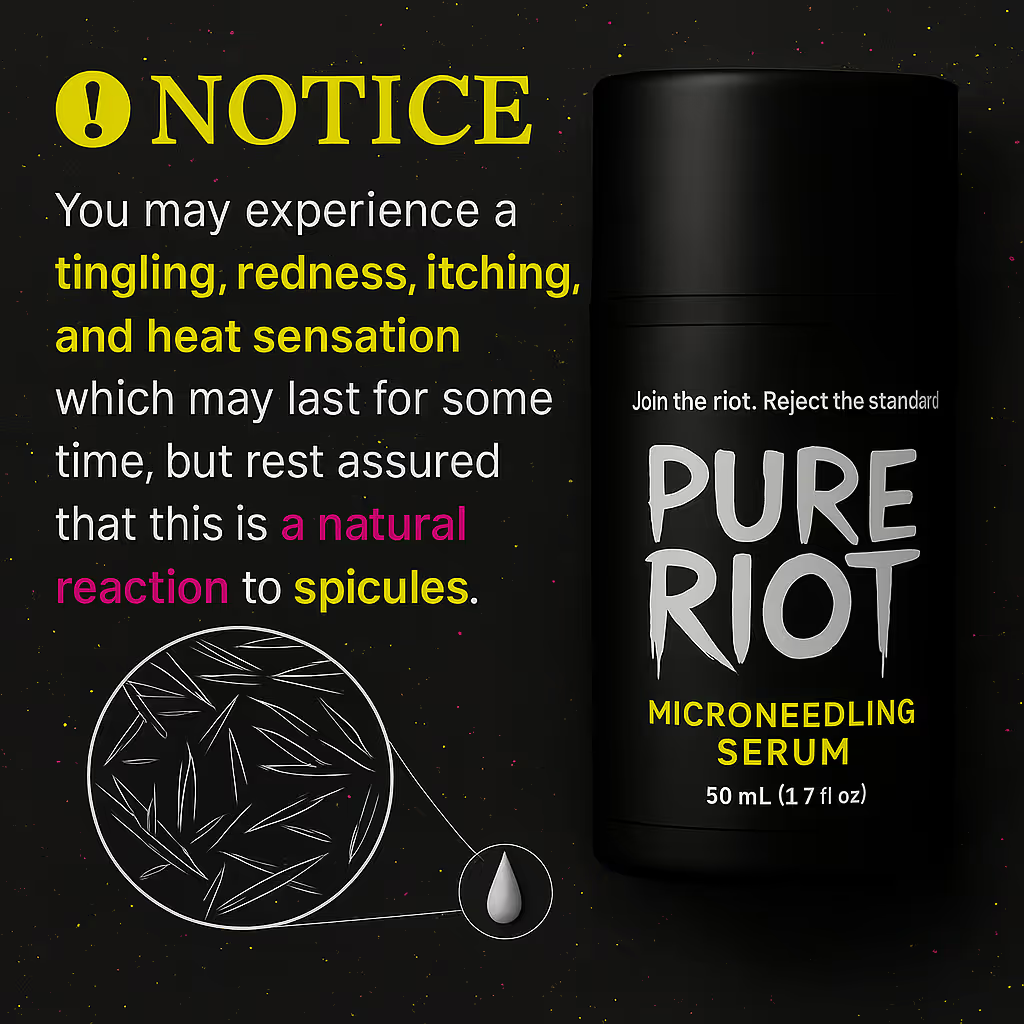
You'll feel a slight tingle when you apply our serum. That is the spicules at work. This is feedback from your skin, signaling the start of the repair process. The spicules stay in your skin for up to 72 hours, continuing to stimulate your natural renewal cycle.
Traditional microneedling has risks. Reused cartridges. Infection. Significant downtime. We don't believe you need to choose between results and safety. You deserve both.
Our formulations are 100% natural. No synthetic preservatives. No artificial fragrances. No toxic chemicals. This is what skin science looks like when it's on your side.
Long-term skin barrier health is a marathon. It requires a shift in mindset. It demands consistency over intensity.
Listen to your skin. It communicates with you. If it feels tight, dry, or irritated, simplify. Give it what it needs, not what the latest trend dictates.
Adapt your routine to the seasons. Your skin's needs change with humidity and temperature. What works in summer might be too harsh in winter.
Keep your routine simple and effective. A strong, healthy barrier thrives on gentle care and targeted support. Protect your skin from the outside world every day. This includes consistent sun protection and shielding your skin from pollution.
Let your skin do what it was built to do. Your body is an incredible machine with innate healing capabilities. Our role is to support those capabilities. Not to override them.
Your skin barrier is more than just a layer of cells. It's your shield. It's your protector. A healthy barrier is the foundation of truly healthy, resilient, and radiant skin. You don't need more products. You need the right approach.
Stop letting the industry break down your shield with harsh treatments and empty promises. Stop accepting that "results" must come with pain or risk. You deserve a solution that respects your skin's biology.
If you're ready to rebuild, look for solutions that actually reach the barrier. Solutions that work with your skin, not against it. PureRiot's Spongilla spicule serum creates micro-pathways. It allows healing ingredients to get where they're needed. It empowers your skin to heal itself.
Find how nature's microneedles can rebuild your skin's shield and help you truly improve skin barrier function. This is your skin. This is your power. Take it back.
Discover how nature's microneedles can rebuild your skin's shield.
Join the riot. Reject the standard.
© 2026 PureRiot. All Rights Reserved.
.png)


