
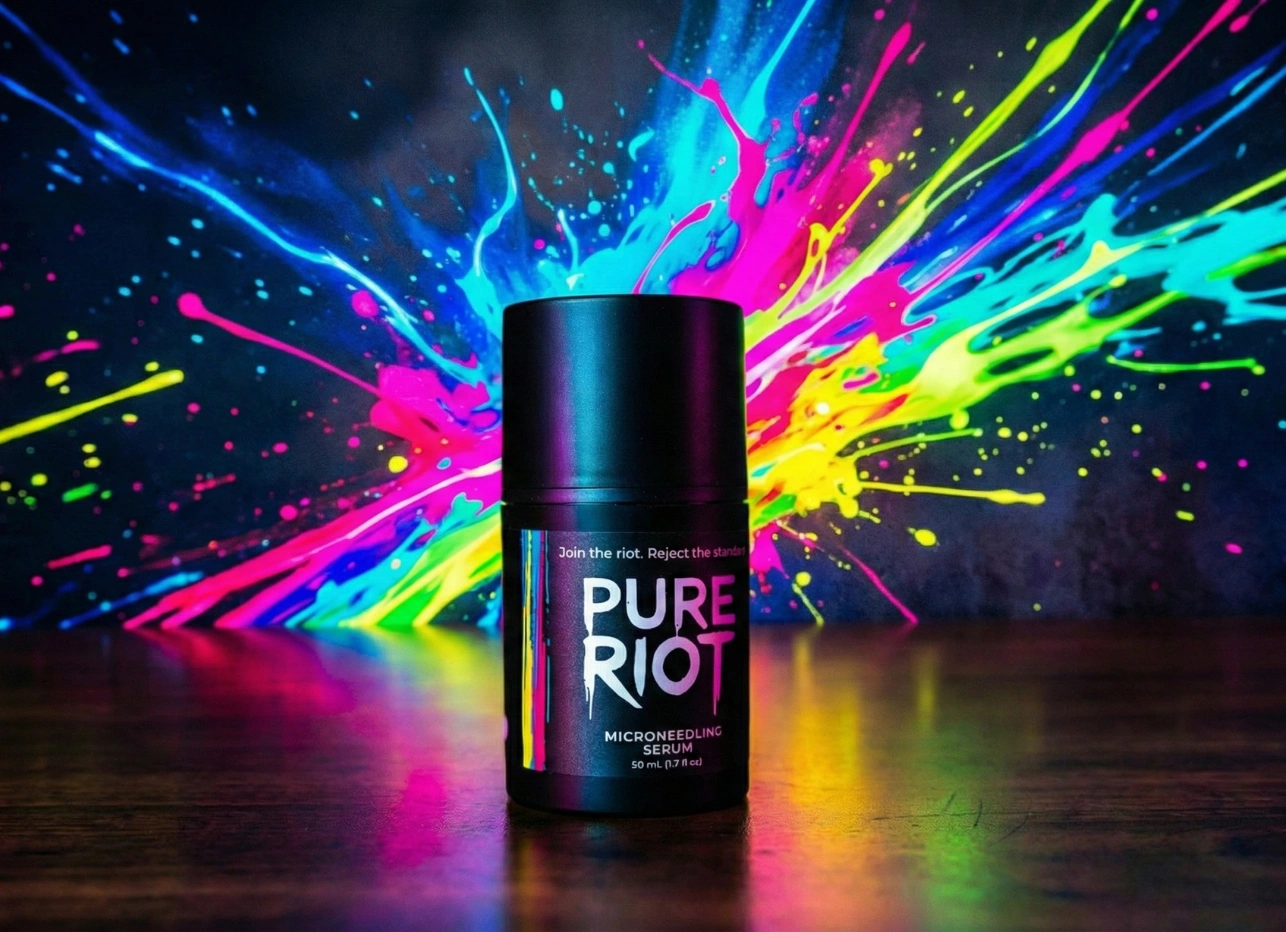
Traditional microneedling works, but it requires needles, numbing cream, and days of recovery. PureRiot's Microneedling Serum delivers active ingredients that support collagen production without puncturing your skin. Same goals. No discomfort.
January 28, 2026
January 28, 2026
Yes. But probably not as much as you're imagining.
Traditional microneedling causes mild to moderate discomfort. Most people describe it as tolerable prickling or light scratching. With numbing cream and a skilled practitioner, the procedure becomes manageable for most.
But here's the thing: "manageable" isn't the same as "pleasant."
The fear of pain keeps many people from ever trying microneedling. They want the benefits: reduced acne scars, smoother texture, fewer fine lines. But they don't want needles repeatedly puncturing their face.
That's a reasonable position.
Understanding what traditional microneedling actually feels like helps you decide whether it's right for you. It also helps you understand why alternatives like PureRiot's Microneedling Serum have become increasingly popular for people who want results without the clinical procedure, the numbing cream, or the multi-day recovery.
Traditional microneedling creates controlled injuries in your skin using fine, sterile needles. The medical term is collagen induction therapy. The concept is straightforward: damage the skin in precise ways, and the body repairs itself with fresh collagen and elastin.
Professional devices like the Dermapen or SkinPen oscillate rapidly, inserting needles into your skin at depths ranging from 0.25mm to 3.0mm. This activates fibroblasts, the cells responsible for building collagen.
The results address real concerns. Acne scars. Stretch marks. Fine lines. Uneven tone. Sun damage. Research shows collagen Type I production can increase up to 400% within six months of treatment.
The question is whether you need metal needles and clinical procedures to get there.
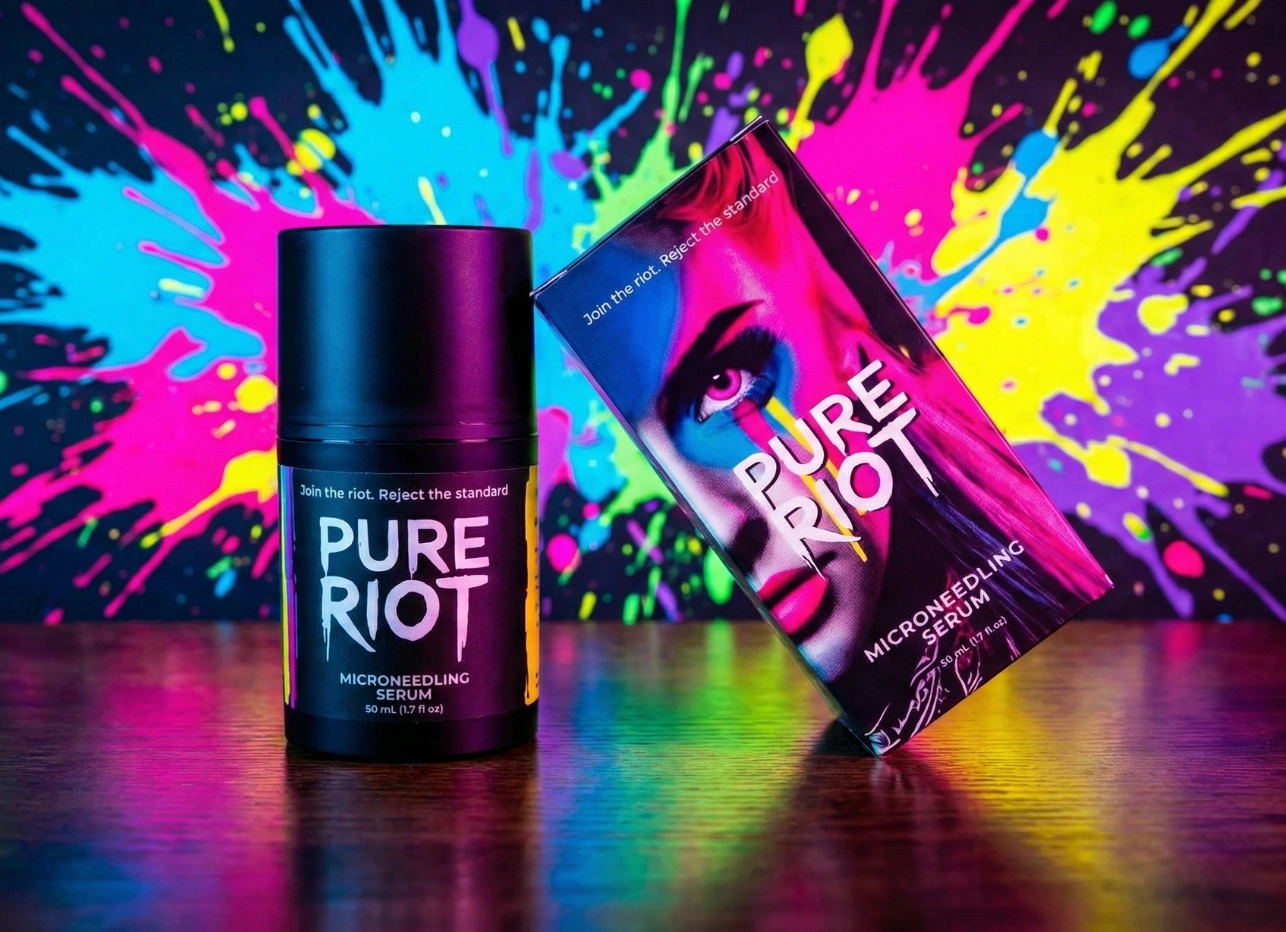
PureRiot's Microneedling Serum takes a different approach. Instead of metal needles, it harnesses Spongilla—a freshwater sponge containing microscopic natural spicules that penetrate the skin's surface. These micro spicules exfoliate dead cells, unclog pores, stimulate collagen production, and create micro-channels that amplify absorption of active ingredients like hyaluronic acid, niacinamide, and salicylic acid.
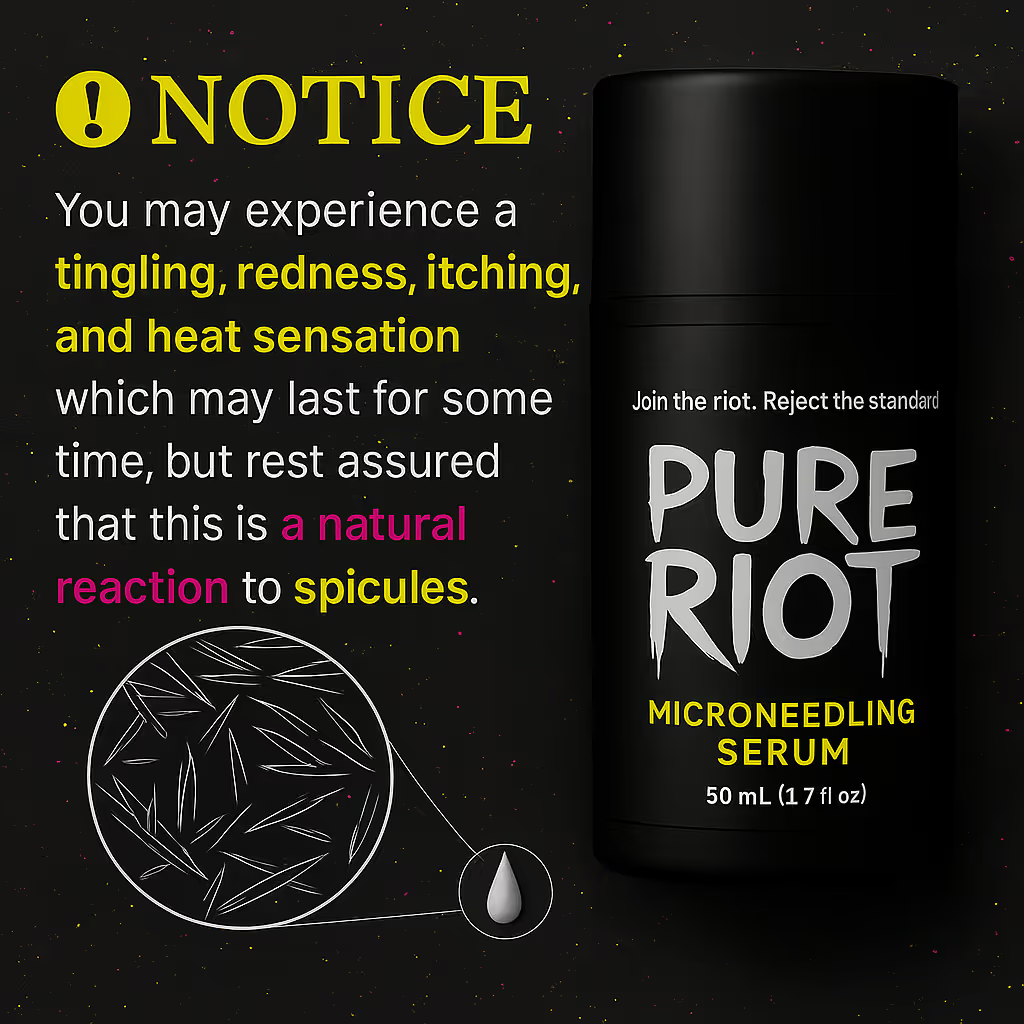
You'll feel it working. That tingling, needle-like sensation signals the Spongilla doing exactly what it's supposed to do. But you're trading a clinical appointment, numbing cream, and days of visible redness for a serum you apply at home two to three times per week.
Lists of features don't tell you much. But side-by-side comparisons reveal what matters.
Traditional microneedling has been the standard for years. It works. The clinical evidence is solid. But "effective" and "practical" aren't the same thing.
Most people don't skip microneedling because they doubt it works. They skip it because the process demands too much. The appointment scheduling. The numbing cream. The days of visible redness. The cost per session. The explanation to coworkers about why your face looks sunburned.
These aren't trivial concerns. They're the actual reasons people never start.
PureRiot's Microneedling Serum doesn't claim to be traditional microneedling. It's a different approach to the same goal: stimulating your skin's renewal process to address texture, tone, pores, and fine lines.
The question isn't which one is "better." The question is which set of trade-offs fits your life.
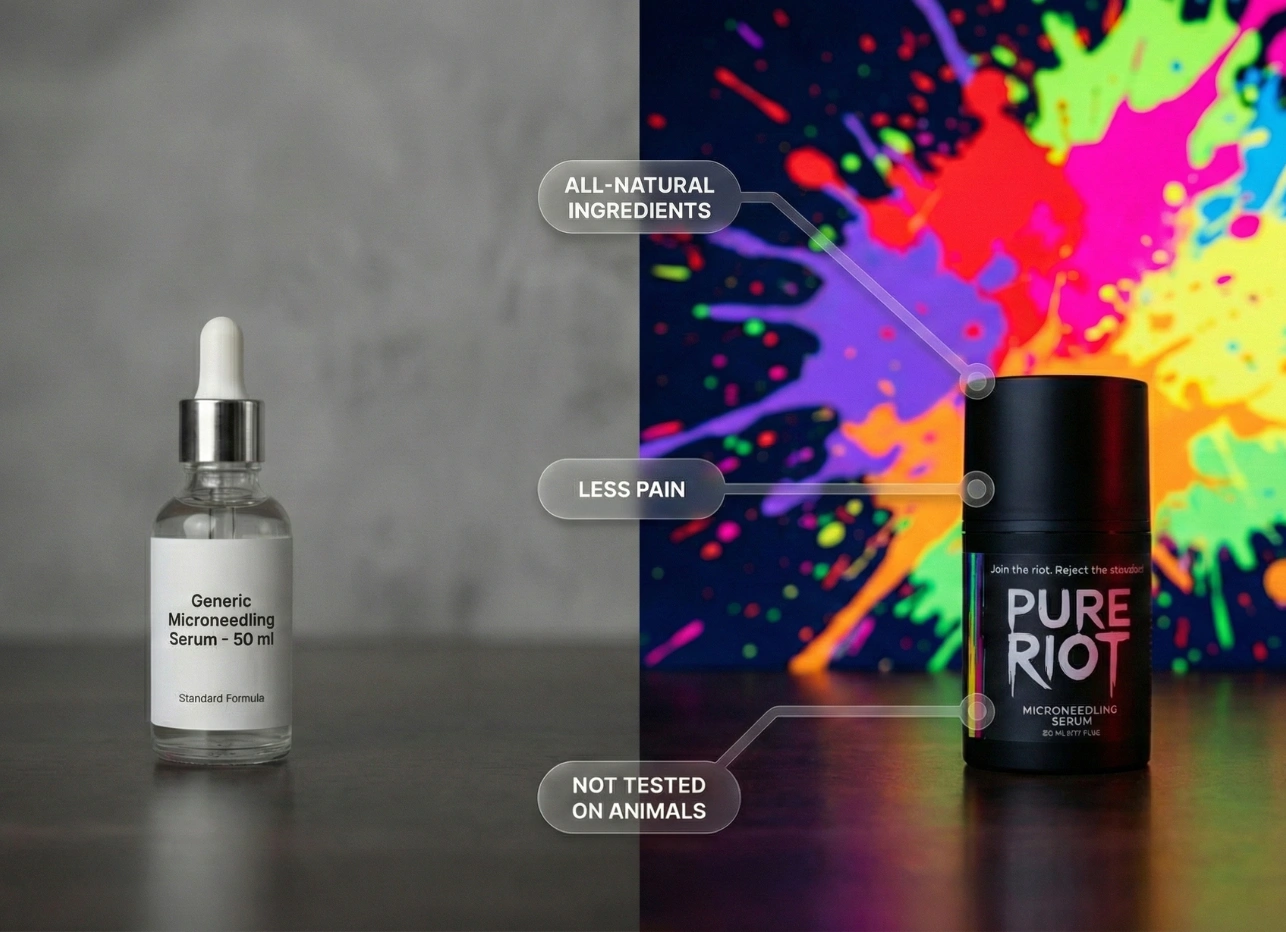
The table makes something clear. Traditional microneedling front-loads the intensity: more pain, more recovery, more cost, more preparation. PureRiot distributes the process differently: gentler sensation, shorter sensitivity window, lower cost, simpler routine.
Neither approach is wrong. But one of them probably fits your circumstances better than the other.
Traditional microneedling feels like rapid pin pricks moving across your skin. Some describe it as light scratching. Others compare it to an electric toothbrush vibrating against their face.
The sensation changes depending on where the device travels. Fleshy areas feel less intense. Bony areas like the forehead, jawline, and around the nose feel sharper.
Modern devices have improved. The oscillating vertical needle motion creates a smoother experience than older dermarollers. But "smoother" is relative. You're still being punctured thousands of times.
This is the trade-off traditional microneedling asks you to make: temporary discomfort for long-term results.
PureRiot asks a different question: what if the discomfort could be dramatically reduced while still delivering results?
The serum produces a tingling, needle-like sensation during application. Sensitivity for the first 24 hours is normal and expected. But compare that to clinical microneedling's multi-day recovery with visible redness, swelling, and restrictions on your routine. The scale of disruption differs significantly.
Yes. Some zones are significantly more sensitive than others.
The face varies dramatically. Your forehead and temples sit close to bone, which means less cushioning and sharper sensation. The area around your nose tends toward heightened sensitivity. Cheeks and chin feel less intense because fat provides natural padding.
The neck and chest contain thinner skin with fewer sebaceous glands. Patients often describe warm stinging rather than sharp prickling. Adequate numbing becomes essential.
Scalp microneedling for hair restoration brings moderate discomfort. High nerve concentration plus minimal fat layer equals noticeable sensation. Sessions are brief, but they're felt.
Body treatments on the abdomen, thighs, and buttocks for stretch marks often feel less intense than facial work. Thicker skin helps. But areas near bone still produce sensation.
Every zone requires calculation. How much discomfort am I willing to accept for these specific results?
With PureRiot's serum, the calculation simplifies. Apply it to your face in gentle circular motions, avoiding the eye area and lips. The tingling sensation tells you it's working. The 24-hour sensitivity period passes. No numbing cream. No practitioner appointments. No week-long recovery.
Five variables determine your experience with traditional microneedling.
Needle depth matters most. Shallow treatments at 0.25mm cause minimal discomfort. Deeper treatments at 1.5mm to 3.0mm, the kind that address serious scarring, require numbing cream and mental preparation.
Your personal pain threshold plays a significant role. Genetics, previous experiences, and your psychological state during treatment all influence perception. Some people barely notice deep treatments. Others struggle with shallow ones.
Skin condition affects sensitivity. If you use retinoids, have rosacea, or generally have reactive skin, expect heightened awareness. Discontinuing active ingredients several days before treatment helps.
Numbing cream effectiveness varies. Quality matters. Application technique matters. Giving it enough time to absorb matters. When everything aligns, pain signals diminish significantly.
Practitioner skill changes everything. Experienced hands know proper pressure, optimal speed, and efficient patterns. Sharp, single-use needles create cleaner punctures than dull ones.
Notice how many variables need to align for a comfortable traditional microneedling experience.
PureRiot's serum simplifies the equation. If you have sensitive skin, perform a patch test before regular use. Apply two to four pumps. Massage in circular motions. Leave it on without rinsing. Follow with Riot Recovery Renewal Cream. Use two to three times per week. That's the protocol. No practitioner skill required. No numbing cream timing to perfect.
Yes. Noticeably more.
Without numbing, the sensation becomes persistent prickling that intensifies as the session continues. The forehead, eye area, and jawline feel particularly sharp. Anything beyond 0.5mm depth benefits significantly from topical anesthesia.
Most professional clinics apply numbing cream as standard protocol. They understand that patient comfort affects outcomes. Tense muscles and flinching create inconsistent results.
Some practitioners offer alternatives: cooling devices, vibration distraction, CBD-infused serums. These help patients who want to avoid pharmaceutical numbing agents.
But here's what these alternatives reveal: traditional microneedling requires solutions to problems it creates.
PureRiot's approach changes the problem. The Spongilla micro spicules produce sensation—you'll feel that tingling, needle-like awareness that signals active penetration. But it's sensation you control, at home, without pharmaceutical numbing agents or clinical appointments. The 24-hour sensitivity period replaces days of recovery management.
Traditional microneedling causes less discomfort than ablative laser resurfacing or deep chemical peels. More sensation than LED therapy or gentle facials.
Fractional ablative lasers create intense heat and typically require stronger anesthesia. Microneedling offers faster recovery with less post-procedure discomfort.
Professional microneedling devices hurt less than traditional dermarollers. Vertical needle oscillation creates cleaner punctures than the rolling, angled motion of handheld devices. Dermarollers drag through tissue, causing more micro-tears.
Radiofrequency microneedling with devices like Morpheus8 or Vivace combines needles with heat energy. More intense sensation. Stronger numbing required. More significant post-procedure discomfort. Enhanced results, but at a cost.
Every comparison involves trade-offs. More effective treatments typically mean more discomfort and longer recovery.
PureRiot occupies different territory. It's not competing to be the least painful needle-based option. It's offering natural micro spicules instead of metal needles, home application instead of clinical appointments, and 24-hour sensitivity instead of multi-day recovery. The trade-off calculation changes entirely.
Post-treatment discomfort resembles mild sunburn. Tightness. Warmth. Tenderness. Most people experience this for 24 to 48 hours.
The immediate aftermath involves visible redness, slight swelling around the eyes, and skin warmth from the inflammatory healing response. These effects peak within hours and diminish over one to three days.
Applying serums or moisturizers during the first 24 hours may sting lightly. Gentle, fragrance-free products reduce this issue. Avoiding active ingredients, hot showers, intense exercise, and sun exposure prevents discomfort from escalating.
This is the recovery period traditional microneedling requires. The procedure itself might last 30 minutes. The healing process extends for days.
PureRiot's serum produces sensitivity for the first 24 hours after application. This is expected and signals active renewal happening beneath the surface. But there's no visible redness requiring explanation at work. No restrictions on your routine beyond that initial period. Within days, skin feels smoother and looks brighter. Within two to four weeks, visible reduction in pores, fading blemishes, and softer fine lines.
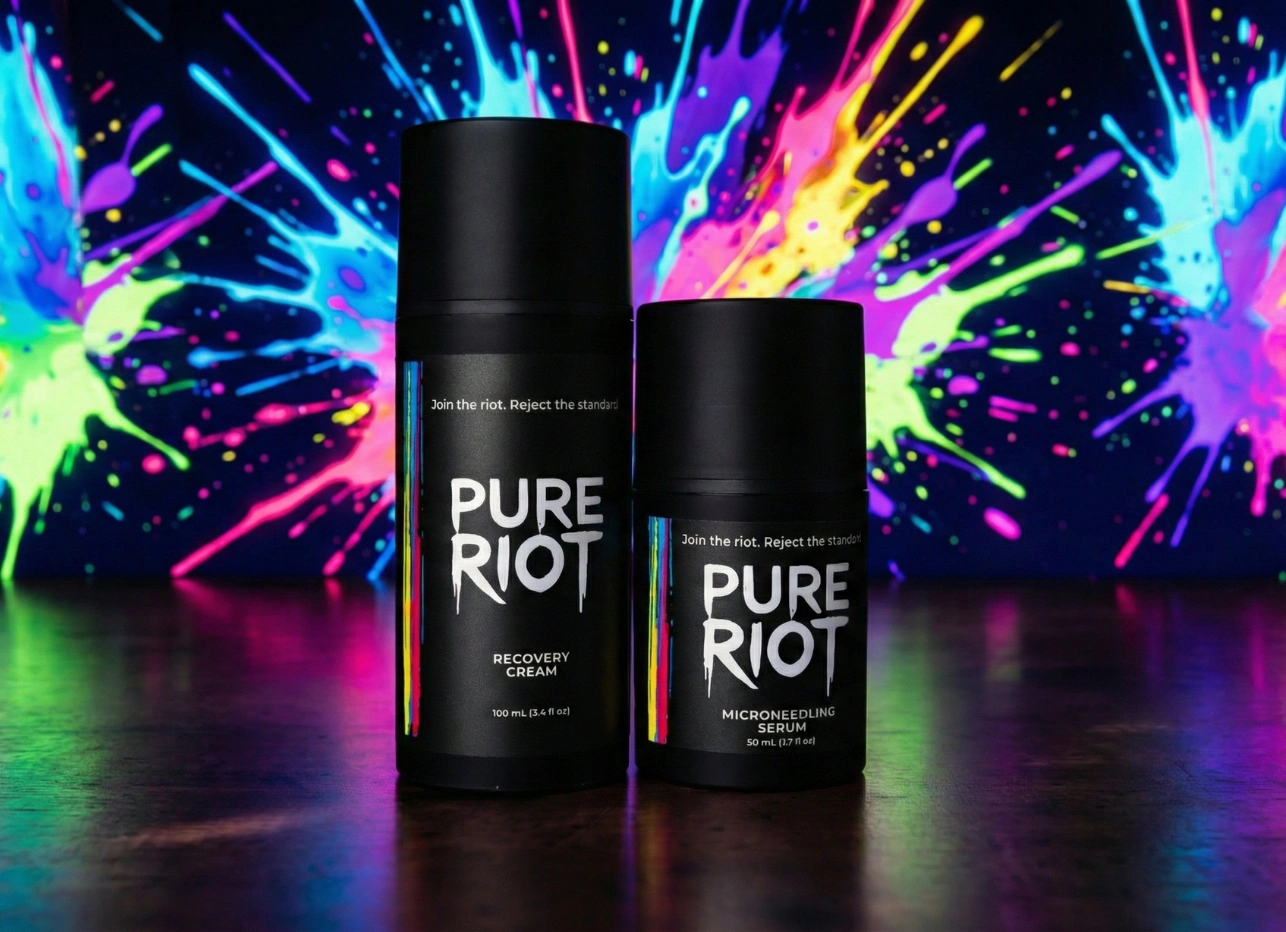
The serum works best as part of a two-step system. Apply PureRiot's Microneedling Serum, then follow immediately with Riot Recovery Renewal Cream. The serum exfoliates and stimulates. The cream soothes, hydrates, and locks in benefits.
Knowing the difference protects your health.
Normal healing includes temporary redness lasting 24 to 72 hours. Light flaking around days three to five. Temporary dryness that responds to moisturization. Minor bruising in sensitive areas that resolves within a week.
Warning signs require attention. Severe pain beyond 48 hours suggests complications. Yellow discharge or pus may indicate infection requiring antibiotics. Prolonged swelling beyond one week or significant scarring warrants immediate consultation. Allergic reactions to topical products need prompt evaluation.
Traditional microneedling creates wounds. Wounds can become infected. This isn't fear-mongering. It's biology.
PureRiot's natural micro spicules penetrate the skin's surface without creating the same wound profile as metal needles. The formula includes D Panthenol to soothe irritation and promote healing, plus Frankincense to calm redness. These ingredients work with the Spongilla to minimize complications while maximizing results.
Before your appointment: Stop retinoids and acids three to five days prior. Arrive hydrated. Avoid alcohol for 24 hours. Discuss pain tolerance concerns during consultation.
During the procedure: Allow full numbing cream absorption, typically 20 to 30 minutes. Practice slow, deep breathing. Communicate with your practitioner about discomfort levels. Distraction through music or conversation helps some people.
After treatment: Apply hydrating serums with hyaluronic acid immediately. Use gentle, fragrance-free products for one week. Avoid sun exposure. Apply SPF 30+ daily. Skip makeup for 24 hours. Cold compresses soothe residual warmth.
PureRiot's protocol: Dispense two to four pumps onto clean fingertips. Massage onto your face in gentle circular motions until fully absorbed. Avoid the eye area and lips. Do not rinse. Leave on skin. Follow immediately with Riot Recovery Renewal Cream for optimal results. Use two to three times per week. If you have sensitive skin, perform a patch test before regular use.
The complexity gap reveals something important. When a treatment requires appointments, numbing cream, practitioner expertise, and week-long aftercare protocols, you're managing a medical procedure. When it requires seven steps you complete at home in minutes, you're caring for your skin.
Clinical evidence supports traditional microneedling's effectiveness. Systematic reviews show significant improvement in acne scarring. Research demonstrates measurable collagen increases, pore size reduction, and improved skin smoothness.
When performed correctly with proper numbing, most patients describe the experience as tolerable. Multiple sessions spaced four to six weeks apart produce optimal results. Each treatment becomes more familiar.
Some people have high pain tolerance and easy access to skilled practitioners. They recover quickly and don't mind blocking out days for healing. Traditional microneedling makes sense for them.
Others value convenience and gentler approaches. They want to support their skin's health without scheduling procedures, applying numbing cream, or explaining redness at work the next day. They're willing to accept a tingling sensation and 24-hour sensitivity period in exchange for avoiding the clinical experience entirely.
PureRiot's Microneedling Serum serves the second group. It delivers Spongilla's natural micro spicules alongside potent actives—hyaluronic acid for moisture, niacinamide for brightening, salicylic acid for pore control—without requiring a practitioner, a procedure room, or a recovery week.
The formula tackles acne, blemishes, blackheads, oiliness, large pores, uneven texture, fine lines, and hyperpigmentation. Non-comedogenic. Low-irritating. No artificial colors. No parabens, sulfates, synthetic preservatives, or artificial fragrances.
The question isn't which approach is objectively better. It's which approach fits your life, your comfort level, and your goals.
Different sensations make direct comparison difficult. Botox involves brief needle sticks in specific locations. Traditional microneedling creates thousands of superficial punctures across treatment areas. With proper numbing, most patients find them similarly tolerable. PureRiot's serum produces a tingling, needle-like sensation from the Spongilla micro spicules, but involves no injections and no metal needles.
Topical numbing cream effects wear off within one to two hours. You may notice tingling as sensation returns. Full normal sensation returns within several hours.
Avoid aspirin, ibuprofen, and blood-thinning medications because they increase bruising risk. Acetaminophen is acceptable if desired. Most patients find topical numbing sufficient without systemic pain medication.
Sensitive skin types experience increased awareness during treatment. Thorough numbing cream application becomes particularly important. Discuss sensitivity with your provider beforehand so they can adjust parameters. For at-home alternatives like PureRiot, perform a patch test before regular use to assess your skin's response to the Spongilla micro spicules.
At-home devices use shorter needles, typically 0.25mm to 0.5mm, creating minimal discomfort. The sensation resembles light scratching. However, these devices cannot achieve the depth or results of professional treatments. PureRiot's serum offers a different approach—natural micro spicules instead of metal needles—with a tingling sensation and 24-hour sensitivity period that most users find manageable.
First-time patients often experience heightened awareness from unfamiliarity. Subsequent treatments typically feel less intense as expectations calibrate. The physical sensation remains similar. Only your relationship to it changes.
You'll feel a tingling, needle-like sensation on first application. This is normal. It's the Spongilla micro spicules penetrating your skin's surface. Sensitivity for the first 24 hours is expected and signals active renewal happening beneath the surface. The sensation diminishes as your skin adjusts over subsequent applications.
Join the riot. Reject the standard.
© 2026 PureRiot. All Rights Reserved.
.png)