
Your skincare ingredients never reach where they need to go. Microneedling serum changes that. Learn why delivery matters more than formulation.
January 28, 2026
January 28, 2026
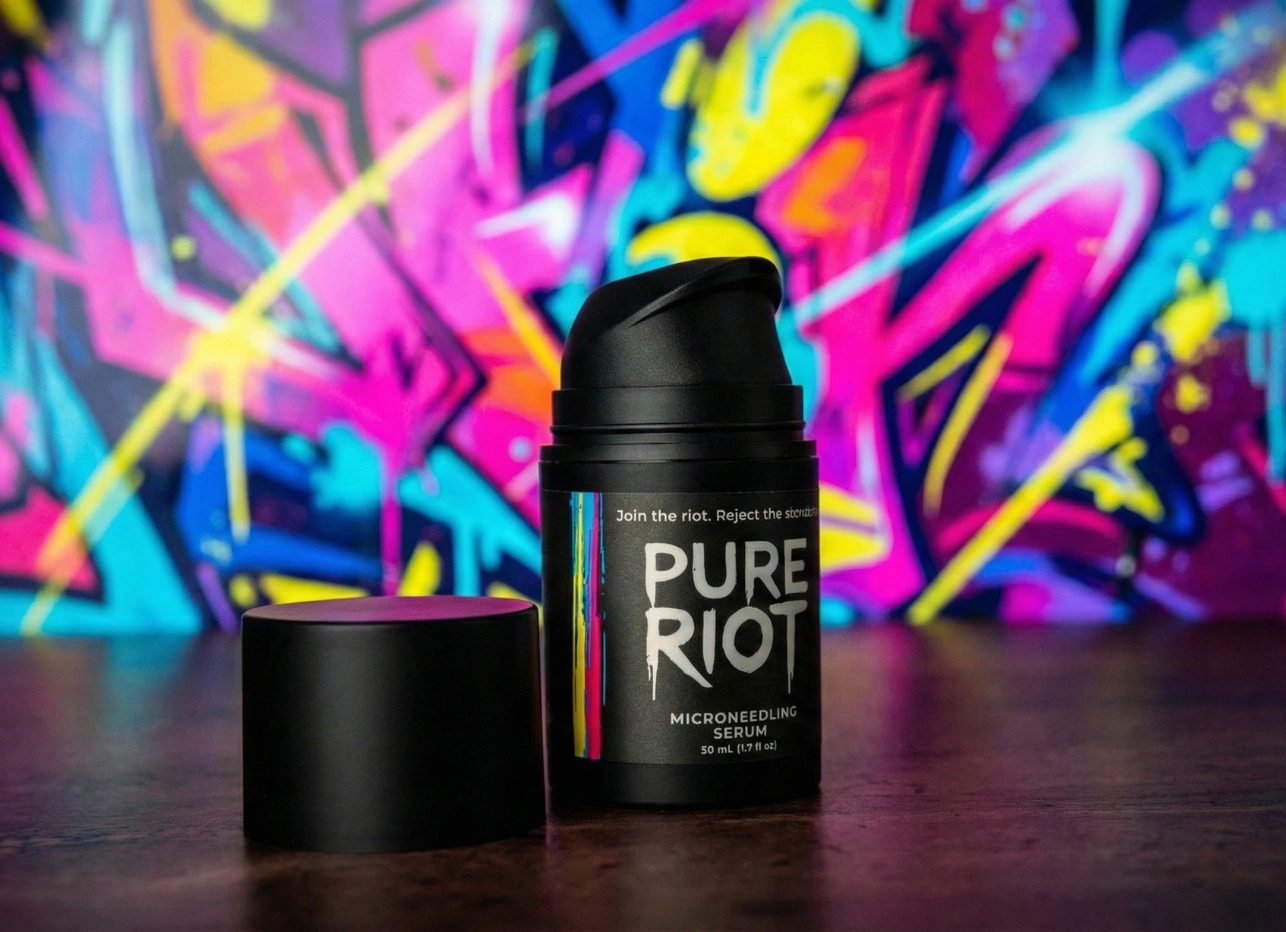
There's a problem with how we think about skincare.
We buy products. We apply them. We wait. And most of the time, we're disappointed. The ingredients we paid for never actually reach the places they need to go.
Your skin is a fortress. It's designed that way. The outer layer exists specifically to keep things out. Pollutants, bacteria, UV rays. Your skin does its job well.
Too well, it turns out.
That expensive hyaluronic acid serum? It's sitting on the surface, hoping for an invitation that never comes. Those anti-aging peptides you invested in? They're bouncing off the door like uninvited guests.
This is the fundamental irony of modern skincare. We've created remarkable formulations with ingredients that genuinely work. But the delivery system is broken.
Enter microneedling serum.
Microneedling changes the equation. It creates thousands of tiny channels in your skin. Temporary openings. Pathways where none existed before.
Microneedling, also known as collagen induction therapy, works by creating controlled micro-injuries that trigger your skin's natural healing response. Research published in the Indian Dermatology Online Journal confirms that it's widely used both for collagen stimulation and as a transdermal delivery system for topical treatments.
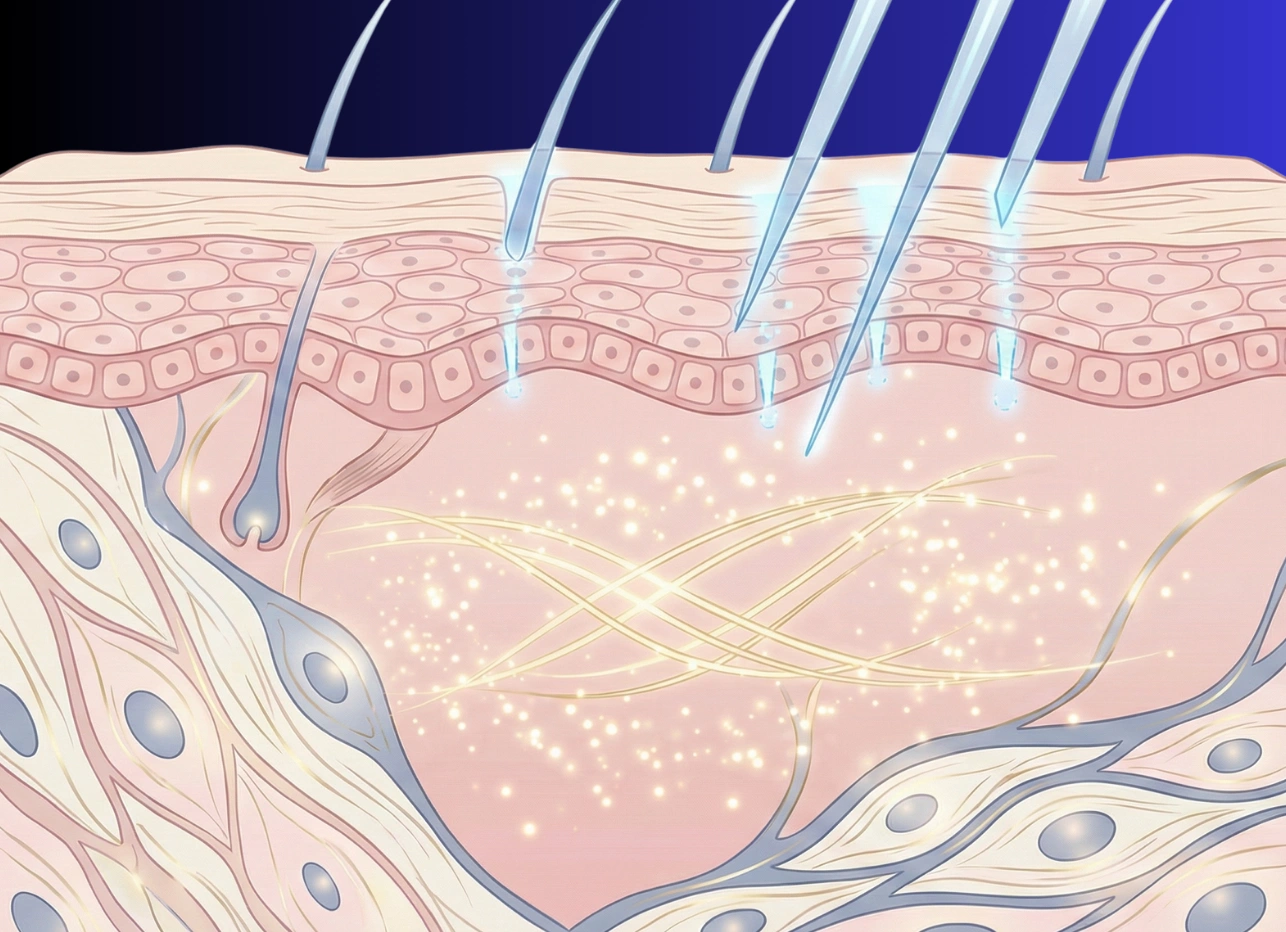
Suddenly, your skin isn't just a barrier. It's a recipient.
But here's what most people miss: microneedling alone isn't the answer. The procedure creates opportunity. What you do with that opportunity matters more than the needling itself.
A microneedling serum is designed for this exact moment. It's formulated to work with the process, not against it. The ingredients are chosen because they belong there, in those freshly opened channels, at the precise depth where they can actually do something.
Think about that. For perhaps the first time, your skincare products can reach their intended destination.
This changes everything about what results are possible.
Not everything should go through those channels. This is where people make costly mistakes.
Your skin is temporarily vulnerable after microneedling. It's receptive, yes. But receptive to everything, not just the good stuff. Apply the wrong ingredients and you'll trigger inflammation. Irritation. Redness that lasts for days instead of hours.
The right microneedling serum understands this delicate balance.
Hyaluronic acid is the gold standard for post-treatment care. According to Harvard Health, it's a humectant capable of binding over one thousand times its weight in water. The Cleveland Clinic confirms that a quarter-teaspoon of hyaluronic acid holds about one and a half gallons of water.
When it penetrates those micro-channels, hydration reaches layers of skin that have never experienced it before. The effect is profound. Plumpness. Dewiness. That lit-from-within quality people spend thousands trying to achieve.
But not all hyaluronic acid is created equal. Molecular weight matters. Low-weight molecules penetrate deeper. High-weight molecules stay closer to the surface, creating a moisture barrier. The best microneedling serums contain both, working in concert.
Peptides belong there too. Small chains of amino acids that signal your skin to behave younger. To produce more collagen. To repair and regenerate with urgency. Under normal circumstances, these peptides barely penetrate the surface. With microneedling, they reach the cellular machinery that actually responds to their message.
Growth factors. Ceramides. Niacinamide. Centella asiatica. Each ingredient chosen not because it sounds impressive on a label, but because it performs at depth.
What to Avoid in Standalone Application
What doesn't belong in standalone post-treatment application? Retinoids. Vitamin C in high concentrations. Strong exfoliating acids applied separately after the fact. These are powerful ingredients with legitimate anti-aging benefits. But timing and formulation matter. Apply them to freshly treated skin without proper buffering and you're adding insult to injury.
This is why all-in-one liquid microneedling formulations have an advantage. When ingredients like salicylic acid are balanced within a formula that includes soothing agents like D Panthenol and Frankincense, they work synergistically rather than aggressively. The formulation does the balancing for you.
There's a reason clinical microneedling produces dramatic results. Trained practitioners understand skin anatomy. They know which depths trigger collagen production. Which areas need different approaches. Which serums pair with which treatment intensities.
But professional treatments come with professional barriers.
Cost
A single session runs hundreds of dollars. According to Healthline, microneedling may cost anywhere from $200 to $800 per session, depending on the treatment needed. A full treatment series can cost thousands. That's before you factor in the premium serums applied during treatment.
Downtime
Your skin needs recovery time. Redness. Sensitivity. Days when you can't wear makeup or go about your normal routine. For people with demanding schedules, that's a significant ask.
Pain
Let's be honest about this. Professional microneedling involves needles penetrating your skin. Numbing cream helps, but discomfort is part of the package.
These barriers aren't dealbreakers for everyone. But they exclude a lot of people who could benefit from the fundamental promise of microneedling: getting active ingredients past the skin's defenses.
What if the channels could be created without metal needles?
This is where liquid microneedling enters the conversation. Products like Riot Liquid Microneedling Serum take a fundamentally different approach to the same problem. Instead of metal needles, they use Spongilla, a freshwater sponge containing natural micro spicules.
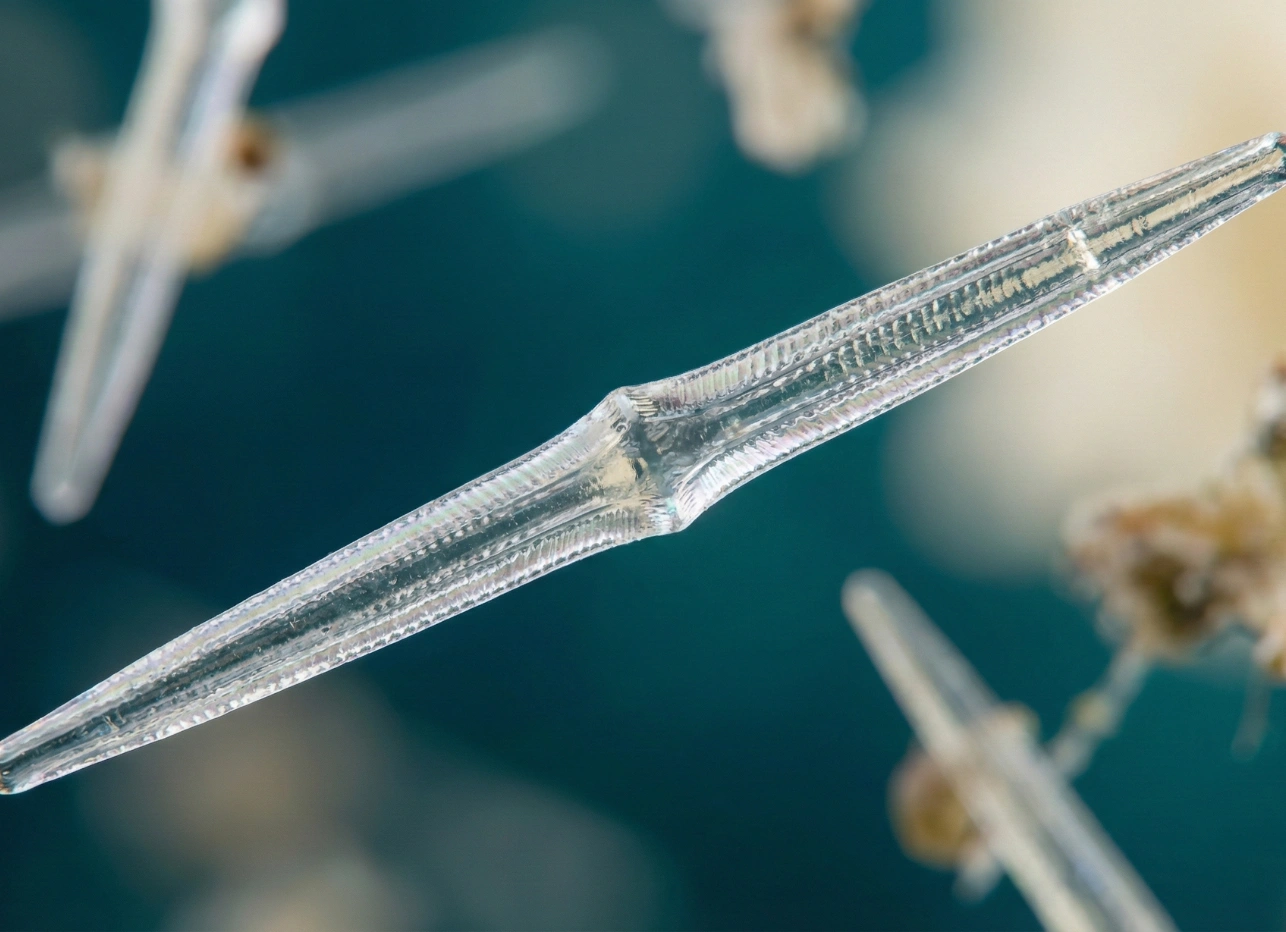
Research confirms that sponge spicules can dramatically enhance skin penetration of active ingredients. These microscopic structures do what needles do, just differently. They penetrate the skin's surface, create micro-channels, stimulate collagen production. The mechanism is the same. The delivery method is gentler.
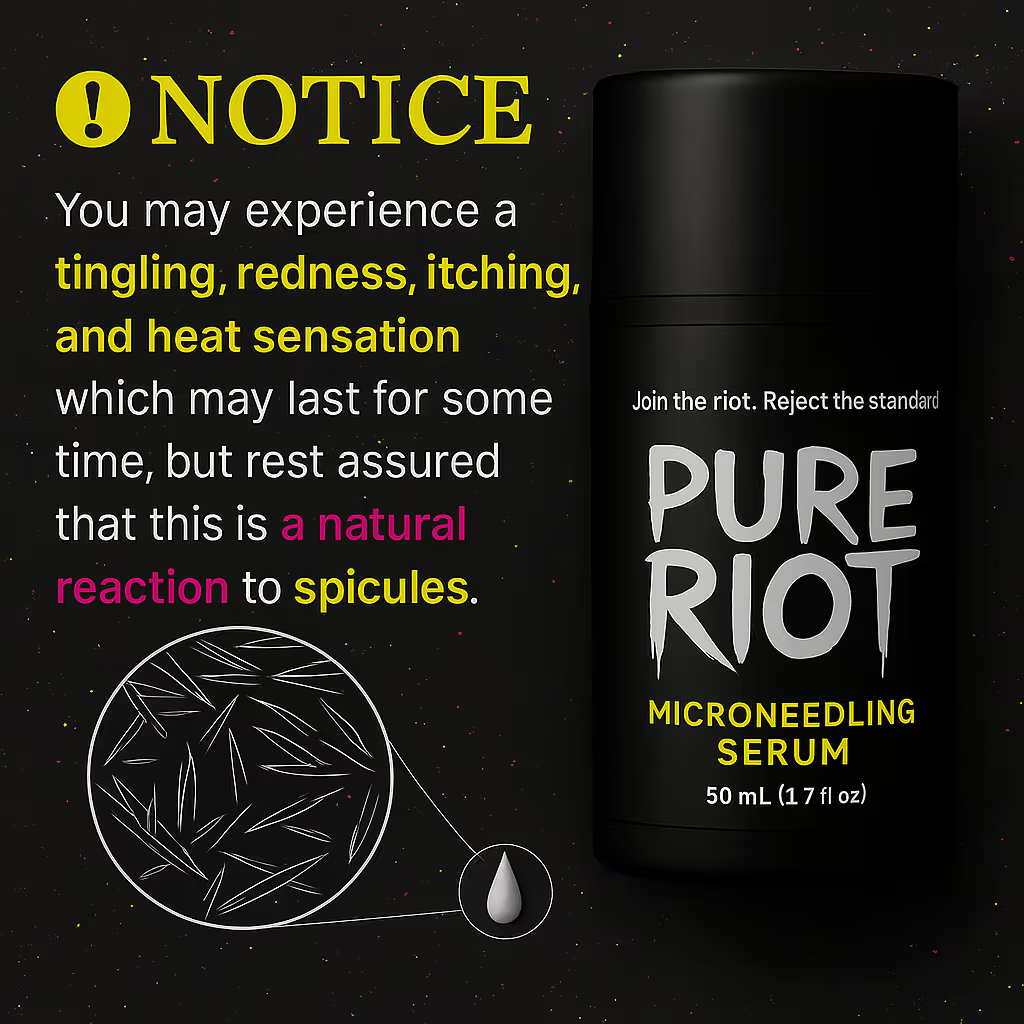
You'll feel it working. That needle-like tingling sensation? That's the spicules doing exactly what they're supposed to do. Creating pathways. Opening doors. Preparing your skin to actually receive the active ingredients that follow. Sensitivity for the first 24 hours is normal and signals active renewal beneath the surface.
The difference is accessibility. No appointments. No numbing cream. No multi-day recovery period. You apply it at home, two to three times a week, and let biology do the rest.
Creating channels is only half the equation. What goes through those channels determines your results.
This is where most at-home microneedling fails. People buy devices but pair them with whatever serum they have lying around. They create the opportunity but waste it on ingredients that don't belong there. Or they miss the absorption window entirely.
The best liquid microneedling formulations solve both problems at once. They create the channels and deliver the payload in a single step.
What's Inside Riot Liquid Microneedling Serum
Riot Liquid Microneedling Serum combines Spongilla's micro spicules with a complete active ingredient stack.
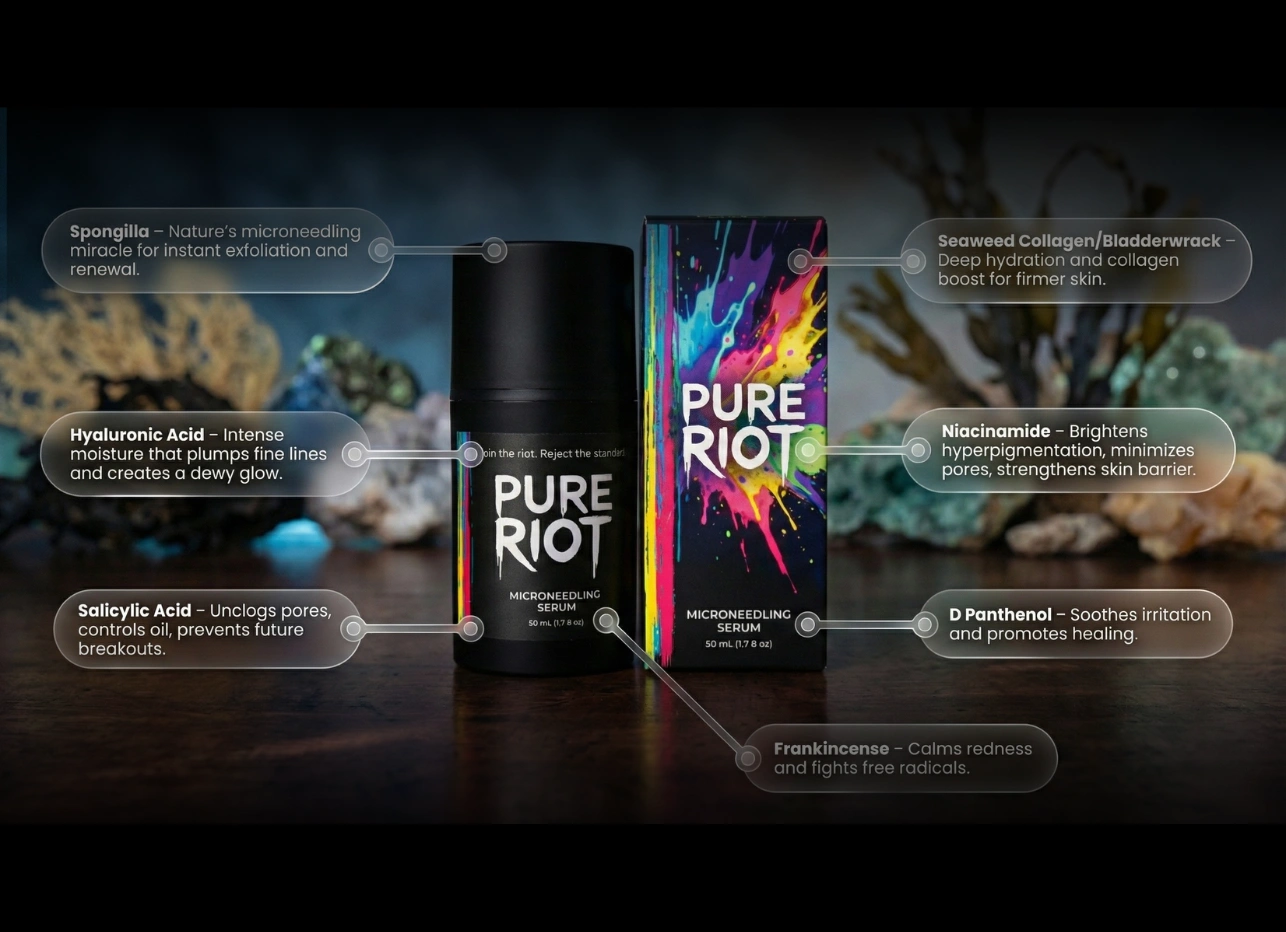
Hyaluronic acid for deep hydration that plumps from within.
Niacinamide to brighten, minimize pores, and strengthen the skin barrier. According to research published in the journal Antioxidants, niacinamide demonstrates significant benefits for skin barrier function, hyperpigmentation reduction, and anti-inflammatory effects.
Seaweed collagen from Bladderwrack for firmness and anti-aging benefits.
Salicylic acid to unclog pores, control oil, and prevent breakouts. Research in ScienceDirect confirms salicylic acid's comedolytic, keratolytic, and anti-inflammatory properties make it effective for acne treatment.
D Panthenol to soothe and promote healing. According to research in Molecules, topical dexpanthenol accelerates wound healing with rapid re-epithelialization and restoration of skin barrier function.
Frankincense to calm redness and fight free radicals. Studies published in PLoS One confirm frankincense essential oil's anti-inflammatory properties and its benefits for skin health.
The spicules create access. The actives do the work. The soothing ingredients ensure your skin tolerates the process without excessive irritation.
This combination approach addresses something traditional microneedling often struggles with: the timing problem.
With traditional microneedling, there's a window. About five minutes after treatment when absorption peaks. Miss it and you've wasted the opportunity.
Professional treatments handle this seamlessly. The practitioner applies serum immediately. No gap. No hesitation.
At-home devices often fail here. People finish needling, set down the device, check their phone, and remember too late that timing matters. The channels close. The moment passes.
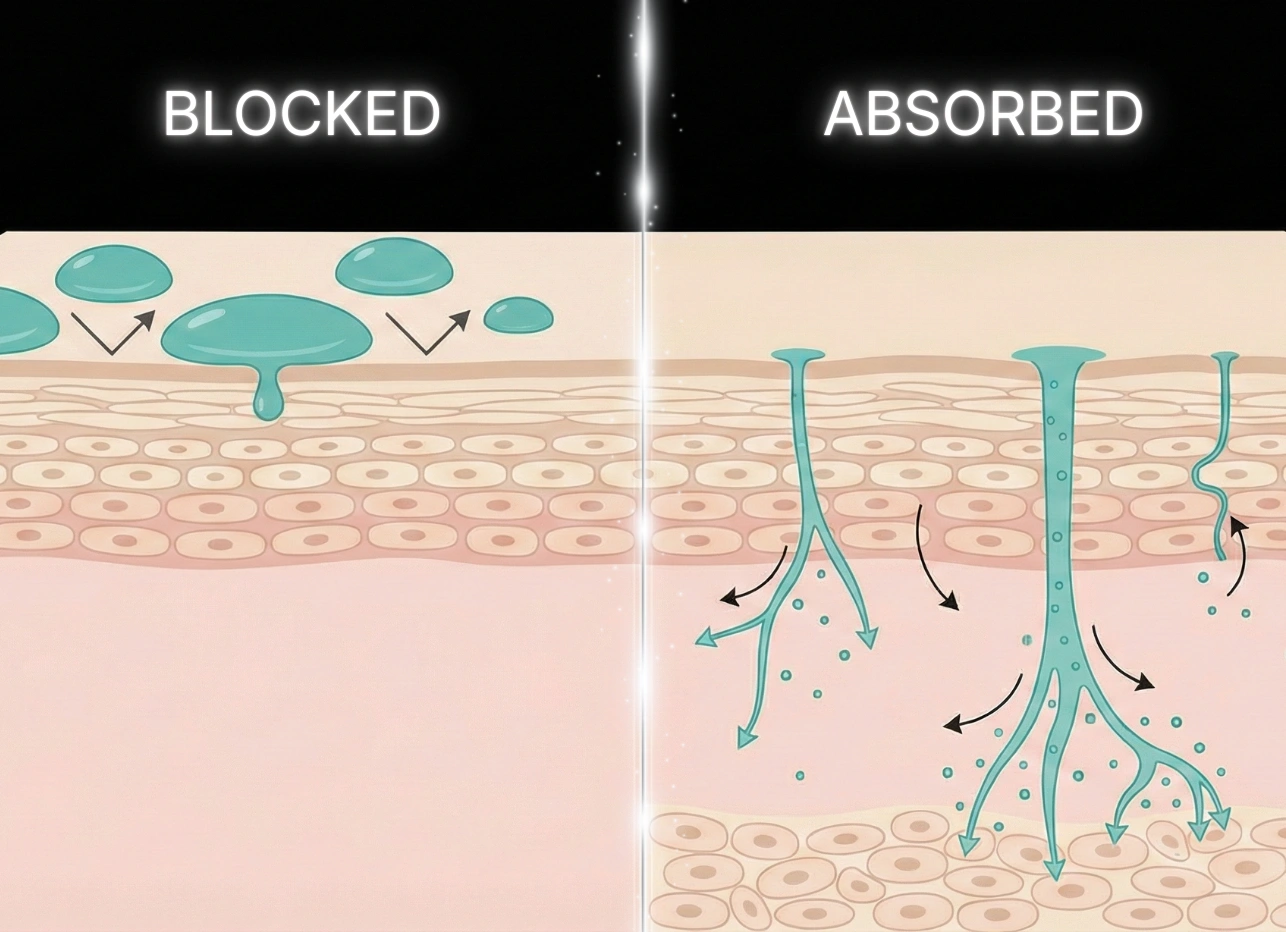
Liquid microneedling eliminates this problem entirely. Riot Liquid Microneedling Serum creates channels and delivers ingredients simultaneously. There's no gap because there's no separation between the two steps. The spicules penetrate while the actives absorb. One action, two functions.
This isn't a minor convenience. It's a fundamental improvement in how the process works.
The application is straightforward.
Dispense two to four pumps onto clean fingertips. Massage onto your face in gentle circular motions until fully absorbed, focusing on areas of concern. Avoid the eye area and lips. Don't rinse. Leave the serum on your skin.
Follow immediately with Riot Recovery Renewal Cream. The serum exfoliates and stimulates. The cream soothes, hydrates, and locks in benefits. They're designed as a two-step system for maximum results.
Use two to three times per week. If you have sensitive skin, perform a patch test before regular use.
Expect that needle-like tingling sensation on application. Expect sensitivity for the first 24 hours. This is the product working, not a problem to solve.
Liquid microneedling isn't trying to replace professional treatments for everyone. If you have deep acne scarring or significant wrinkles, clinical microneedling with its greater depths may still be your best path.
But for texture issues? Enlarged pores? Dullness? Fine lines? Uneven tone? Mild scarring? Oiliness? Hyperpigmentation? Liquid microneedling addresses these concerns effectively, consistently, and without the barriers that keep people from starting treatment in the first place.
It's also a bridge. Something you can use between professional sessions to maintain results. Or a starting point to see how your skin responds before committing to more intensive procedures.
The Math Makes Sense
Consider the numbers. Professional microneedling runs several hundred dollars per session. A full treatment series of four to six sessions can easily exceed two thousand dollars. That's before maintenance. Before premium serums. Before the time cost of appointments and recovery.
Liquid microneedling costs a fraction of that. A single bottle provides weeks of treatment. The ingredients are already optimized for the application. No separate purchases required. No coordination needed.
The skin doesn't care about the source of the micro-channels. It responds to what penetrates. Natural spicules from Spongilla create the same opportunity as metal needles. What matters is what you do with that opportunity.
Understanding microneedling serum changes how you think about skincare entirely.
Most products promise. They suggest. They imply results based on ingredient lists and marketing claims. A good microneedling serum actually delivers. Physically. Literally. To the depths where change happens.
That's not a small difference. It's a fundamental shift in what skincare can accomplish.
We've spent decades buying hope in bottles. Products that work on the surface while the real problems live below. Creams that moisturize the top layer while the dermis remains dry. Anti-aging serums that never reach the collagen they claim to stimulate.
Microneedling paired with the right serum breaks that cycle. Whether you choose professional treatments, at-home devices, or liquid microneedling alternatives like Riot Liquid Microneedling Serum paired with Riot Recovery Renewal Cream, the principle remains the same: create access, deliver ingredients, let biology respond.
The skincare industry has sold us a beautiful lie for decades. Apply products to your skin and they'll work magic. But physics doesn't care about marketing. Molecules need pathways. Ingredients need access. Without that access, you're just decorating the surface.
Microneedling serum isn't a trend. It's not a fad. It's the logical conclusion of everything we've learned about how skin actually functions. Create openings. Deliver ingredients. Let biology do the rest.
The question isn't whether this approach works. The science is clear. The results are documented. The question is whether you're willing to approach skincare differently. To stop buying promises and start investing in delivery systems that function.
Your skin has been waiting for ingredients that can actually reach it. The door is open. What you send through it is up to you.
NIH/PubMed - Microneedling collagen induction therapy review (PMC4976400)
NIH/PubMed - Microneedle transdermal delivery research (PMC9864466)
Harvard Health - Hyaluronic acid properties
Cleveland Clinic - Hyaluronic acid benefits
NIH/PubMed - Spongilla spicules skin penetration study
NIH/PubMed - Niacinamide skin benefits (PMC8389214)
ScienceDirect - Salicylic acid acne mechanisms
NIH/PubMed - Dexpanthenol wound healing (PMC7407203)
NIH/PubMed - Frankincense anti-inflammatory properties (PMC5801908)
Healthline - Microneedling cost estimates
Join the riot. Reject the standard.
© 2026 PureRiot. All Rights Reserved.
.png)